Showing posts with label side. Show all posts

Thursday, February 01, 2024

Jerusalem Artichokes (aka Fartichokes)


Seasonal Recipe of the Week
Today we are going to talk about Jerusalem Artichokes, sometimes called Sunchokes, and sometimes Fartichokes! Let's start with some basic info compliments of The New York Times.

“One of the most abundant, curiously neglected and oddly named foods in America is the Jerusalem artichoke. Since its inception the name has involved a comedy of errors not only in this country but in France. The English name of the vegetable, which I find appealing to the taste and semantically captivating, has nothing deliberately to do with the capital of Israel, and that requires explanation. The Jerusalem artichoke is not an artichoke at all, as we know the more sophisticated globe artichoke. The Jerusalem version is actually related to the sunflower. The sunflower is called girasole in Italian, - it means gyrating or turning to the sun. And, at least according to folk etymology, girasole through some slip of nomenclature turned into Jerusalem. That is even more historically fascinating, considering that the vegetable in question is native to America. It was indigenous to the central United States and Canada and was first taken to France by Samuel de Champlain in 1616, from which moment it began to flourish. After its introduction to France, the easily proliferating root vegetable was first referred to as poires de terre (earth pears) or artichauts de Canada (Canadian artichokes).” — The New York Times 1981

Then there is the “fartichoke” business, which is not just a rumor, trust me! It has to do with the high levels of inulin, a soluble fiber, which gives them their sweetness but passes through your digestive system intact until it reaches the colon where gut bacteria breaks it and releases the gas. There are remedies for this such as slow roasting or soaking them in salt water before simmering them in milk. The addition of caraway or fennel seeds is also said to help, which is great news because those flavors work perfectly together. Other great options are to pickle them, purée them, or use them with potatoes and apples in a soup.

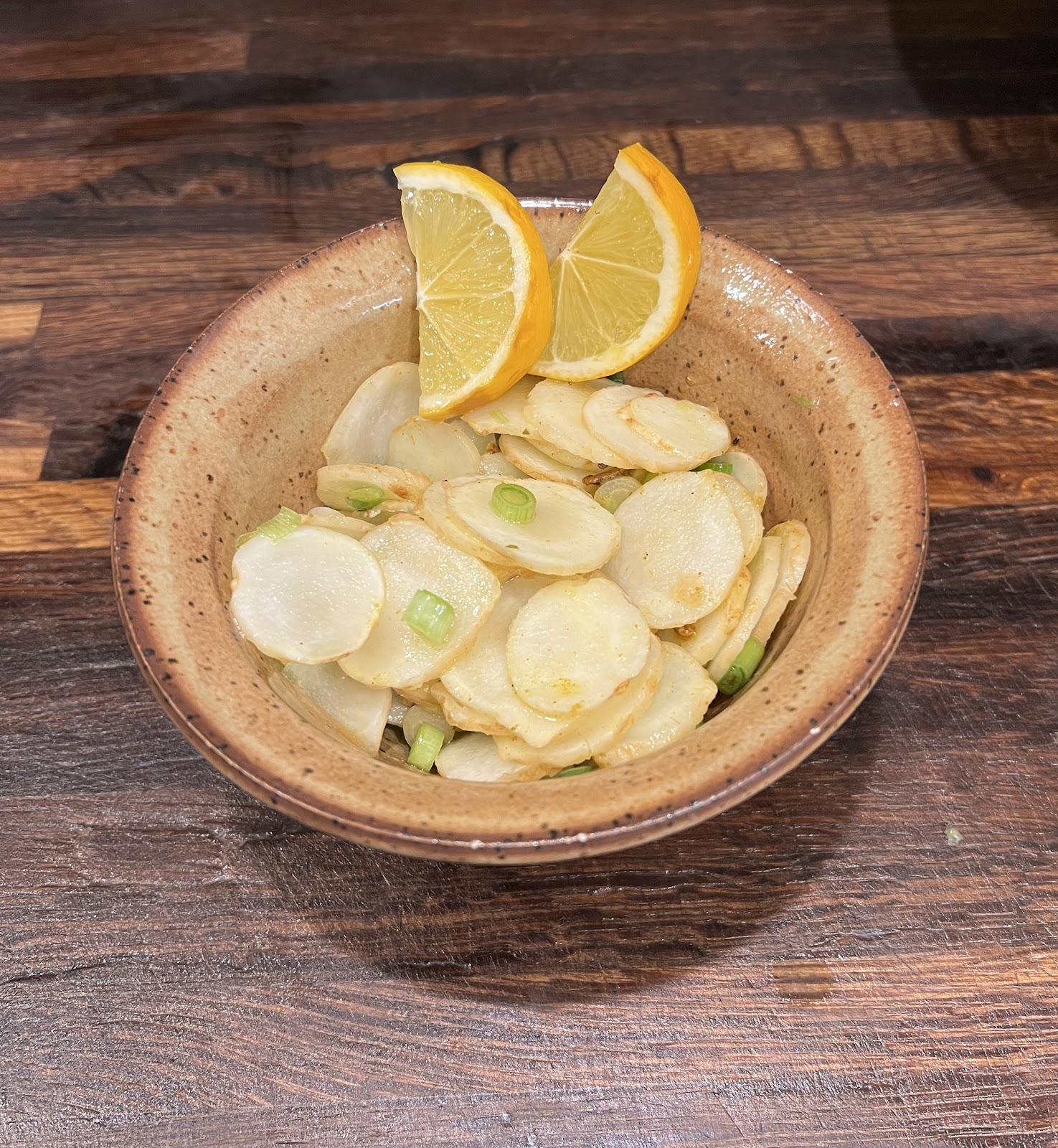
Why discuss this now? Because last week my lovely neighbor "Dan the Fig man" (so-called because he grows hundreds of fig trees in his own personal Garden of Eden ... as well as peaches, he raises chickens, cares for pigeons, and generally is a man at one with nature) called to offer me some Jerusalem artichokes and I was delighted! I tried them 3 ways: a thin sliced marinated salad; a chunky pickle, and roasted herbed slices.

Will report back later about the pickles because they take a while but the other 2 items are fast and delicious. Here are two simple recipes which you can elaborate on and make your own:

Jerusaleum Artichoke salad

Ingredients
8 ounces Jerusalem artichokes, soaked in cold water for a few minutes then brushed clean with a vegetable brush
3 tablespoons lemon juice (this time of year Meyer lemons are available and extra fragrant and delicious)
1/2 teaspoon orange zest
Sea salt to taste
a few grinds of black pepper
1/4 cup of a good quality fruity olive oil
2 scallions, cut into thin slices

Procedure
Once your chokes are free of dirt, slice them very thinly — I recommend using a mandoline slicer. Soak them in some salted water with 1 tablespoon of lemon juice for 30 minutes, then drain well. If they are too wet, the oil dressing will not stick. Then mix together the remaining lemon juice, oil, orange zest salt and pepper and scallions. Let marinate for at least 30 minutes. Now eat!

Roast Jerusalem Artichokes

Ingredients
8 ounces well-scrubbed Jerusalem artichokes(see above instructions) cut into 1/4 inch slices on the diagonal
3 Tablespoons olive oil
Salt and pepper to taste
1 teaspoon fresh chopped herbs, I used Rosemary (still growing from my garden), thyme, and tarragon (you can also use dried herbs)

Procedure
Preheat your oven to 400 degrees and lightly oil a sheet pan. Toss all the ingredients together and spread out on sheet pan. Roast 20 minutes, or until they are tender in the center and browned on the outside. Adjust salt and pepper and serve.

Sunday, January 24, 2021

Cauliflower Rice, really?

Seasonal Recipe of the Pandemic
I know I am late to this game, but I have recently discovered there is more to cauliflower rice than just small bits of tasteless cauliflower. I was introduced to the cauliflower rice thing by friends who were going Paleo and I thought, well I guess if you really need a filler, this will work. But now I understand more of the possibilities. I have been doing lots of experimenting and have come up with some pretty great options. It's like tofu in that it will accept any flavor profile so you can even turn it into something that resembles risotto! Here are a few recipes to get you started, then just go crazy! Sorry about the boring photo!

Coconut Ginger Cauliflower Rice

Ingredients
1/2 head of a large cauliflower
1 cup full-fat coconut milk
2 tablespoons minced ginger
2 scallions, chopped
1/4 teaspoon salt

Procedure
Cut cauliflower into small florets and pulse in a large food processor until the cauliflower is transformed in to small, rice-like pieces. This should yield around 4 cups. Pour the cauliflower rice into a medium pot and add the coconut milk, minced ginger, salt, and scallions. Bring mixture to a simmer over medium/high heat for around 10 minutes, until cauliflower is slightly soft and flavors have combined. Serve immediately or store in the refrigerator to reheat later.

Cauliflower Fried Rice

Ingredients
1 small head of cauliflower, riced
1 tablespoon sesame oil
1/4 cup onion, chopped
1/2 teaspoon garlic powder
Salt and pepper, to taste
1 tablespoon sriracha
2 tablespoons soy sauce
1 cup broccoli, cut into small florets
1/2 red pepper cut into thin strips
1/2 cup peas
2 tablespoons water
1 egg
2 scallions, sliced
1 teaspoon sesame seeds

Procedure
Remove core and leaves from cauliflower. Cut into florets and place into food processor. Pulse until it has a rice-like texture, set aside in large bowl. Heat a skillet over medium heat, add sesame oil, onion, and peppers and sauté until fragrant. Sprinkle with garlic powder, salt and pepper, then add sriracha and half of soy sauce. Then add broccoli and water to pan and cover. Allow to steam for about 5-7 minutes, until broccoli begins to soften. Add cauliflower rice to pan, sprinkle with a little salt and remaining soy sauce. Gently stir to coat cauliflower rice.

Continue cooking for about 10 minutes until broccoli is fork tender and cauliflower rice is soft. Push the cauliflower rice and veggies to the edges of the pan, leaving a space in the center. Crack the egg open in the center of the pan. Let it fry, breaking the yolk apart with a fork. Once the egg is completely cooked, gently mix it in with the cauliflower rice. Garnish with sliced green onions and sesame seeds, if desired.

Cauliflower Risotto

Ingredients
2 tablespoons extra-virgin olive oil
1/2 cup sliced shallot (about 1 large)
4 cups cauliflower rice
1/2 teaspoon ground pepper
1/4 teaspoon salt
3/4 cup low-sodium chicken broth
1/4 cup dry white wine
2 teaspoons cornstarch
1/2 cup grated Parmesan cheese
2 tablespoons chopped fresh herbs, such as chives, parsley or basil
1 tablespoon butter
2 tablespoons goat cheese

Procedure
Heat oil in a large skillet over medium heat. Add shallot and cook, stirring, until starting to soften, about 2 minutes. Add cauliflower rice, pepper and salt; cook until softened, stirring occasionally, 3 to 6 minutes.

Whisk broth, wine and cornstarch in a small bowl and add to the pan. Cook, stirring, until the liquid is creamy and thick, 2 to 3 minutes more. Remove from heat and stir in Parmesan, herbs and butter. Lastly, stir in the goat cheese and serve.

Sunday, October 18, 2020

Leek Upside-down Tart

Seasonal Recipe of the Pandemic
Here is a very cool and unusual recipe I found online and adapted to make it even better. It's very easy but looks very complex. If you follow the directions exactly it will be JLP (just like the picture). A great one to bring to a party if you want to impress. Or make one for yourself and have it with some prosciutto and a nice glass of wine.

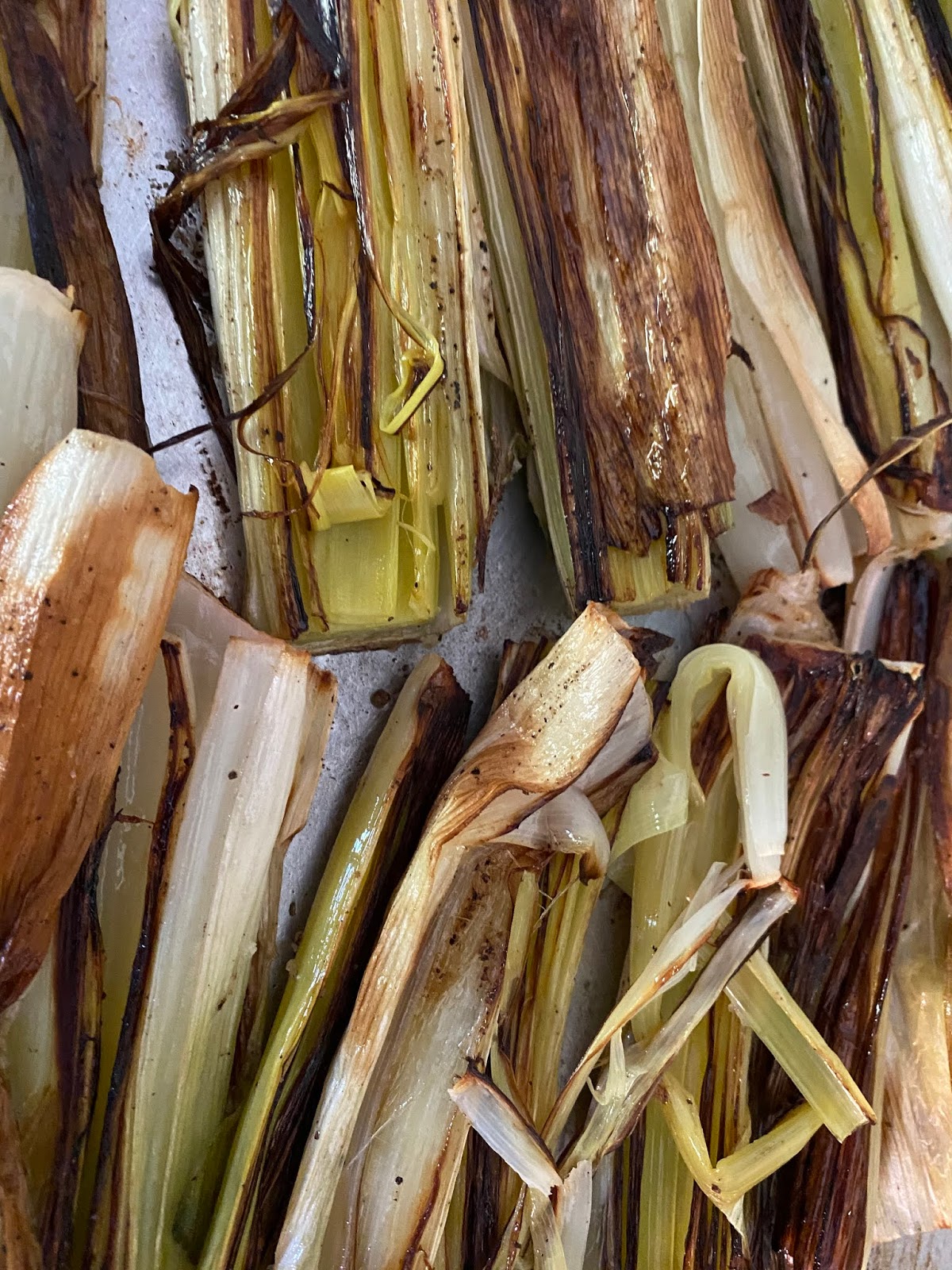
roasted leeks leeks in pan cheese on top of leeks

uncooked puff pastry finished tart

Ingredients
1 14-ounce package frozen puff pastry, thawed
6 leeks
2 tablespoons extra-virgin olive oil
1/2 teaspoon kosher salt
1/2 teaspoon freshly ground black pepper, plus more
1/4 cup aged sherry vinegar
2 tablespoons unsalted butter
1 teaspoon sugar
1 teaspoon thyme leaves, plus more for serving
2 tablespoons Dijon mustard
2 ounces Asiago cheese, grated (about 1/2 cup)
1 tablespoon shredded Parmesan cheese
flaky sea salt and black pepper

Procedure
Place a rack in center of oven; preheat to 400°. Roll out puff pastry on a lightly floured surface to a 12" square. (If you have 2 sheets of pastry, stack tham and gently roll out to stick them together.) Using a 10" cast-iron skillet turned upside down as your guide, trace a circle with a sharp knife around circumference of skillet. Reserve scraps for another use. Prick pastry round all over with a fork. Roll dough onto rolling pin, then unfurl onto a rimmed baking sheet and chill until ready to use.

Trim the root ends and dark green parts off the leeks. Then cut them in half lengthwise and run under cold water while fanning out the layers to remove any sand. Toss leeks, oil, kosher salt, and 1/2 tsp. pepper on another rimmed baking sheet. Arrange leeks cut sides down and roast until tender and lightly browned in spots, about 20 minutes. Let cool. Remove tough, leathery outer layer, then transfer leeks to a cutting board.

Meanwhile, bring vinegar to a simmer in 10" cast-iron skillet over medium-high heat and cook, stirring occasionally, until slightly reduced, about 1 minute. Add butter, sugar, and 1 teaspoon thyme and continue to cook, stirring occasionally, until butter has melted, about 2 minutes. Remove from heat and let cool slightly.

Arrange leeks cut sides down and side by side in rows in vinegar mixture, trimming as needed so they all fit snugly in skillet. Fill any holes with small pieces. You may have a leek or two left, so just eat them. Brush leeks with mustard. Sprinkle with the Asiago and Parmesan cheeses. Drape chilled pastry over leeks, tucking edges inside skillet with a spoon. Cut three 3-inch slits into pastry (be sure to cut all the way through) to let steam escape—this will help the pastry cook more evenly. Bake tart until pastry is deeply golden brown and puffed, 35–45 minutes.

Let tart cool slightly, about 5 minutes. Carefully place a large plate on top of skillet. Using towels, invert tart onto plate. If some of the leeks get left behind in skillet, use a butter knife or offset spatula to release and nestle them back into tart. Garnish with the extra thyme, sea salt, and pepper then pour me a glass of wine!

Tuesday, May 26, 2020

Farro Pilaf

Seasonal Recipe of the Pandemic
My new obsession is finding creative ways to use the miscellaneous leftovers in my fridge, which seem to be piling up at a fast rate. I guess it's because we are eating all our meals at home. Yesterday, I was looking for some ingredients to create a grain side dish and this happened and it was amazing! I got the idea to throw in an egg from my fried rice recipe and it really made it moist and delish. Here's my Mediterranean-inspired version, but get creative with whatever ingredients you have and make it your own. Enjoy!


Ingredients
2 tablespoons extra virgin olive oil
1 large shallot, diced
2 cups cooked farro (I love the fast-cooking Faro from Trader Joe's, 10 minutes and done!)
1/2 cup full-fat feta, crumbled
1/4 cup pitted green olives
1/4 cup pitted Kalamata olives
1 roasted red pepper, skin removed
1 tablespoon capers
1 egg, lightly beaten
2 scallions, thinly sliced

Procedure
In a large pan, heat the olive oil and sauté the shallot until translucent, about 3 minutes. Then add the faro and dump in everything else except the egg and the scallions. Cook, stirring occasionally for 5 minutes until everything is hot — make sure you give the feta time to melt. Then add the raw egg and stir until it's all coated and the egg sets. Remove form heat, garnish with the scallions, and eat!

Wednesday, September 04, 2019

Spanish Scallop Salad

Every year for my lovely sister-in-law's birthday I cook a feast for her and her family at their home on Long Beach Island. This summer I decided to make it a themed buffet of Spanish tapas! It gave me the opportunity to use authentic Spanish ingredients I bought at Despaña in Soho, as well as local island seafood, and produce from my garden. (I made about 12 different tapas for the party and plan to feature all of them in the coming months here on the blog. It was a huge success and we have already agreed on a middle eastern buffet for next summer.) I had planned to do some kind of marinated seafood salad, originally thinking of using Calamari, but when I got to our favorite local fish market and the sign said: "local scallops" I could not resist. Enjoy, and know you can use any kind of seafood you want for this dish.


Ingredients
1 1/2 lbs scallops, calamari(rinse, dry and cut into rings), or shrimp (peeled and deveined)
2 tablespoons fresh lime juice
1 tablespoon aged sherry vinegar
1/3 cup good olive oil
1 clove minced garlic
1/2 teaspoon salt
1/4 teaspoon black pepper
1 small red onion, cut in half, then into very thin slices
1/3 cup pitted Kalamata olives
2 cups grape tomatoes, cut in half
2 ribs of celery, finely sliced
1 cup loose packed flat leaf parsley, leaves only
1/4 cup cilantro leaves (optional)

Procedure
Clean the scallops and cut them in half if large and dry them (you cannot sauté them if they are wet). Sauté scallops in a little olive oil, lemon juice, salt, and pepper until the surface shows some small cracks, then remove from pan. If using shrimp or calamari, lightly poach them in some water, white wine, lemon juice, and herbs of your choice and then quickly cool them.

Whisk together the lime, vinegar, oil, garlic, salt, and pepper. Stir in onions and let sit 5 minutes. Meanwhile, combine the cooled seafood, olives, tomato, celery and parsley. Toss with dressing and refrigerate 1 hour before serving to allow flavors to combine. If you want extra heat, add some Aleppo pepper to the mix.

Saturday, December 27, 2014

The Best Potato Gratine Recipe Ever (and some other stuff)

Seasonal Recipe of the Week
This past week, my family enjoyed a small, intimate Christmas dinner at home. Instead of the usual Chinese food, we decided to go old-school and do ham, green beans, and potatoes gratine. Now I don't know about you guys, but I have found previous attempts at this dish to be always just not right. It's either too fatty, or too dry, or not cooked enough (even after what seems like days in the oven). So I started to do some research and immediately turned to the Food52 website, which has never let me down. And what do you know, their featured recipe was for potato gratine! Fate has handed me a gem, and I am passing it on to you with some options to make it your own. The best part is: it only takes 30 minutes to cook and you can prepare it ahead of time!

Ingredients
5 tablespoons unsalted butter
1 to 2 garlic cloves
6 large waxy potatoes (about 2 1/2 pounds), such as red bliss, peeled and sliced about 1/8-inch thick
2 cups half-and-half
Salt and freshly ground black pepper to taste
1/8 teaspoon freshly grated nutmeg
1 cup grated Gruyère

Procedure
Preheat oven to 400° F. Rub the inside of an 8 × 8-inch baking dish with 1 tablespoon of the butter. Smash the garlic with the side of a knife and sprinkle generously with salt. Chop and scrape the garlic into a mushy paste. Combine garlic paste, potatoes, half-and-half, and remaining 4 tablespoons butter (cut into 1/2-inch pieces) in a pot; stir. Season with salt and pepper and grate in a hint of nutmeg. Bring to a boil over medium-high heat while stirring the mixture with a spoon. After 8 to 10 minutes, the potatoes will be a little tender, and the sauce will thicken. Taste and adjust the seasoning as you like. Dump the mixture into the prepared dish — smooth the top as much as possible. At this point, you can hold the dish until you're ready to bake, even overnight in the refrigerator.

Cover the gratin with Gruyère and bake until deeply golden brown, about 20 to 30 minutes (longer if chilled overnight). Let the gratin cool and set a little before serving.

So, this is the basic recipe, now here are some things you can do to customize this dish. Why not use 1/2 sweet potatoes, or add some zucchini, or thin slices of butternut squash? You can also change the cheese — try cheddar, or goat cheese, or Stilton. Rosemary, thyme, or sage would be interesting and you could also take it in another direction with some sautéed mushrooms or a dribble of truffle oil. Go ahead and explore your options but keep the procedure the same.

Saturday, May 25, 2013

Fiddlehead Ferns

Excellent Ingredient of the Week
From Wikipedia:
Fiddlehead ferns grow wild in wet areas of Northeastern North America in spring. Fiddleheads are a traditional dish of northern New England (especially Maine) in the United States, and of Quebec, Ontario and the Maritimes in Canada. They are typically steamed or boiled before being eaten hot, with hollandaise sauce, butter and lemon or vinegar, or chilled, in salad or with mayonnaise.
The government says: To cook fiddleheads, remove the yellow/brown skin, then boil the sprouts twice with a change of water between boilings. Removing the water reduces the bitterness and the content of tannins and toxins.

The cooking method recommended by gourmets is to spread a thin layer in a steam basket and steam lightly, just until tender crisp. Fiddleheads are available in the market for only a few weeks in springtime, and are fairly expensive. Fiddleheads contain various vitamins and minerals, as well as omega-3 and omega-6 fatty acids. They are a source of antioxidants and dietary fiber. They are low in sodium, but rich in potassium, which may make them suitable for people who need a low-sodium diet. They taste like asparagus or green beans with a slightly bitter edge, have a short shelf life and are very expensive so if you get them cook and eat them immediately. Here’s another way to cook them:

Dan Kluger’s Roasted Fiddlehead Ferns

Ingredients
4 cups fiddlehead ferns
4 tbs. extra-virgin olive oil
Kosher salt, to taste
4 tbs. thinly sliced green garlic (white and light-green part only)
Freshly ground black pepper, to taste

2 lemons (1 for zesting, 1 cut into 4 wedges)

Coarse sea salt, for finishing

Procedure
Preheat oven to 500°F. Trim away any brown or woody ends from the fiddleheads. Wash them thoroughly in several changes of water, removing any papery husks, and dry them. Place a large oven-safe skillet or sauté pan in the oven, and heat for 3 minutes. Remove the pan from the oven, and add the oil. Add the fiddleheads to the pan and season with kosher salt. Return the pan to the oven, and cook the fiddleheads until tender, approximately 5 to 7 minutes, stirring occasionally. Add the green garlic, toss with the fiddleheads, and cook in the oven for 30 more seconds. Remove the pan from the oven. Divide the fiddleheads among four plates and finish with pepper, lemon zest, and sea salt. Serve with lemon wedges.

Saturday, March 23, 2013

Farro

Excellent Ingredient of the Week
Farro, ever heard of it, ever cooked it? Well if not, carpe diem, baby! Farro is not wheat, but a plant and grain all its own. A grain of farro looks and tastes somewhat like a lighter brown rice. It has a complex, nutty taste with undertones of oats and barley. Because farro contains a starch similar to that found in Arborio rice, it behaves much like risotto, releasing a creamy, binding liquid when cooked. But unlike risotto, farro doesn't become gummy; instead, it retains its tender, distinct bite, even if it sits awhile after cooking. Farro can be put into soup and when the grains combine with beans, chickpeas, greens and seafood, great things happen. Farro is rich in fiber, magnesium and vitamins A, B, C and E. It grows best in barren, high-altitude terrain and is almost always grown without chemical pesticides or fertilizers. Because it is so easily digested and so low in gluten, farro can often be eaten by people who are normally gluten-intolerant. Farro flour, made from ground grain, can be used for making both bread and pasta.

Here are some recipes from The New York Times:

Farro With Tomatoes And Pecorino

Ingredients
1 1/2 cups whole-grain farro
2 teaspoons fine sea salt
1 bouquet garni (1 sprig rosemary, 1 sprig sage, and 1 garlic clove, tied together in cheesecloth)
7 tablespoons extra-virgin olive oil
2 peeled garlic cloves, chopped
3 cups cherry tomatoes, stemmed and halved
10 basil leaves
Pinch of red pepper flakes, crushed
1 to 1 1/2 cups vegetable broth
6 tablespoons grated Pecorino cheese
Freshly ground black pepper to taste
Optional shavings of Pecorino cheese

Procedure
Rinse the farro in a fine sieve and rinse under cool running water. Transfer to a large, heavy saucepan and cover with 1 1/2 inches of water. Add the salt and bouquet garni. Bring to a boil, reduce heat and allow to simmer, uncovered, for 15 minutes. Drain, and spread the farro in a shallow pan to cool off. Drizzle with 1 tablespoon of the olive oil, mix well and let rest.Place a heavy saucepan over medium-high heat, add 4 tablespoons of oil and the garlic, and saute for 1 minute. Add the tomatoes, 5 basil leaves and hot red pepper to taste. Add the farro, mix very well and add 1/4 cup of the vegetable broth. Cook over medium heat, stirring slowly and constantly. Add more broth when the farro has absorbed the previous liquid. Keep adding broth until the farro is tender but still has a bit of bite, about 17 minutes. Stir in the grated Pecorino, the remaining basil leaves and the rest of the oil. Stir well. Season to taste with salt and pepper. Serve the farrotto in soup bowls, topped with shaved Pecorino, if desired. Yield: 6 servings

You can also take it to the sweet side:

Farro and Maple Syrup Pudding

Ingredients
1 1/2 cups whole-grain farro
3 cups whole milk
1 cup heavy cream
2 tablespoons unsalted butter, melted
1/3 cup maple syrup
1/4 teaspoon fine sea salt
3 large eggs, lightly beaten
1/4 cup dark brown sugar

Procedure
Put the farro in a fine sieve and rinse under cool running water. Transfer to a bowl, cover with two inches of water, cover the bowl with plastic wrap and refrigerate overnight. Preheat oven to 275 degrees. Drain farro and set aside. In a bowl, mix together the milk, cream, melted butter, maple syrup, salt and eggs. Add the drained farro, mixing well. Pour mixture into a greased 1 1/2-to-2-quart shallow casserole dish and bake on the middle level for 30 minutes. Stir the mixture and sprinkle the top with the brown sugar. Raise the oven heat to 300 degrees and bake for 30 to 40 minutes more, until set. The farro pudding can be served hot, warm or cold. It can also be served plain or with whipped cream, nut biscotti, fresh fruit or a combination.

Saturday, January 19, 2013

Stir-Fried Cabbage with Fennel Seeds

Seasonal Recipe of the Week
This is what the Food 52 website calls a "genius recipe." These recipe are usually simple, have excellent technique are are delicious.

Ingredients
1 1/2 pound green cabbage (half a large head)
1/4 cup vegetable oil
1/4 teaspoon cumin seeds
1/2 teaspoon fennel seeds
1 teaspoon sesame seeds
1 medium-large onion (about 7 ounces), peeled and cut lengthwise into fine half rings
1 teaspoon salt
1/4 teaspoon cayenne pepper
1 tablespoon lemon juice
1/2 teaspoon garam masala

Procedure
Remove coarse outer leaves of the cabbage. If you have a cabbage half, cut it in half again lengthwise, and then core the sections. Push each quarter through your food processor with the shredding blade attachment. Put the oil in a wide,heavy saute pan and set over medium-high heat. When the oil is hot, put in the cumin, fennel, and sesame seeds. As soon as the sesame seeds begin to pop, put in the onion. Stir-fry for 3 to 4 minutes or until the onion has browned a bit. Put in the cabbage and stir-fry for about 6 minutes or until the cabbage has browned. Put in the salt and cayenne. Turn down the heat to medium-low and cook, stirring now and then, for another 7 to 8 minutes or until the onions appear caramelized and soft. Note: you may need to do this in a couple batches. Add the lemon juice and garam masala. Stir to mix. Taste and adjust seasoning. Serves 4.

Saturday, November 24, 2012

Sweet Potato

Excellent Ingredient of the Week
Sweet potatoes are a delicious item when prepared right. For me, that means in baked in the oven, then split in half and eaten with a chunk of butter while watching the 4:00 movie which hopefully is an Elvis beach extravaganza. That’s the way me and my mom used to roll when I came home from school as a teenager. As an adult (and I use that term loosely), I like to make baked sweet potato planks and dip them in chipolte ketchup. I think they should never meet marshmallows under any circumstance. But what else do we know about the sweet potato? Let's use the google...

The sweet potato is a tuberous root vegetable belonging to the same family of plants as the morning glory. It's a particularly popular food crop in the south, and you'll find it in markets all over the US. Sweet potatoes are native to Central America. They are considered a staple in many countries and have been cultivated in Southern states since the 16th century. Nutritionally, sweet potatoes are an excellent source of vitamin A and a good source of potassium and vitamin C, B6, riboflavin, copper, pantothetic acid and folic acid.

Sweet potatoes come in two main varieties here in the States. One has a golden skin with creamy white flesh and a crumbly texture. The other has a copper skin with an orange flesh that is sweet and soft. Americans have been calling the orange-fleshed variety of sweet potatoes "yams" since colonial times when Africans saw familiarities in them to the tuberous variety. The USDA decided to label them as "yams" to differentiate the two varieties. Both varieties of sweet potato, including "yams" can be widely found in supermarket.

Yams are native to Africa and Asia and other tropical regions. Yams are starchy tubers that have an almost black bark-like skin and white, purple or reddish flesh and come in many varieties. The tubers can be as small as regular potatoes or grow upwards of five feet long.The word yam comes from an African word, which means "to eat." The yam holds great importance as a foodstuff because it keeps for a long time in storage. Real Yams can be found in international markets, such as those that specialize in Caribbean foods.

Here is a great unusual sweet potato recipe.

Sautéed Sweet Potatoes and Spinach

Ingredients
2 tablespoons olive oil
2 large sweet potatoes
1 1/2 teaspoons curry powder
1/2 cup water
1/2 cup red onion
1 1/2 pounds spinach
1 tablespoon balsamic vinegar
Coarse salt and ground pepper

Procedure
Heat olive oil in a large nonstick skillet over medium heat. Cut sweet potatoes into cubes; cook, stirring, until starting to soften, 8 to 10 minutes. Add curry powder. Cook 1 minute. Add water and chopped red onion. Cook, stirring, until water evaporates and potatoes are tender and browned, about 10 minutes. Transfer to a bowl. In the same skillet, cook spinach in two batches, adding second batch when first wilts, 2 minutes. Drain; add to potatoes.Stir in balsamic vinegar; season with coarse salt and ground pepper.

Two Cuban Recipes - Ropa Vieja and Papas Rellenas

Seasonal Recipe of the Week
So just because it's fun, let's take a little trip to Cuba for today’s recipe inspiration. It was Bram's idea, and he usually has good ideas. Here's my version, which you make in a slow cooker.

Crockpot Ropa Vieja

Ingrdients
1 1/2 to 2 pounds beef flank steak
1/2 green pepper sliced into strips

1/2 Spanish onion, sliced into strips

2 cloves garlic, peeled and smashed

2 tsp. Salt
2 tsp. coarse Black Pepper

1/2 tsp. cumin
1/2 cup red wine

Procedure
Put all these ingredients into the crockpot in order. Add water to just cover the steak. Set it on low and cook for 6 to 8 hours. When the meat is very tender (comes apart with a fork), remove from the crockpot and finely shred it into a separate dish. Then make the sauce.

Ingredients for sauce
the pepper, garlic,and onion from the crockpot

3 tbsp. Olive oil
2 cups beef broth

1 small can tomato sauce
1 small can tomato paste

1 tsp. oregano

Salt and pepper to taste

Procedure
With a slotted spoon, remove the onion, garlic and peppers from the crockpot and sauté in a large frying pan. Add the tomato sauce, tomato paste and beef broth. 
Add the shredded beef to the tomato mixture and cook together for about 20 minutes, stirring occasionally. Serve with black beans and rice.

And now for something completely different. How about Cuban Papas Rellenas? (AKA meat-stuffed, deep-fried, Potato balls!)

Cuban Papas Rellenas

Ingredients
2 lbs large potatoes (peeled and cut into quarters)

1 lb picadillo (seasoned ground beef, see below)
Vegetable oil for frying
1 cup dry bread crumbs

4 eggs

1 tsp salt

Procedure
Add salt to a pot of cold water, and boil the potatoes until they are soft. Drain the potatoes, and then mash them, then set aside to allow them to cool. Separate the egg yolks from the whites in two bowls. Mix the egg yolks into the mashed potato mixture, whisk the egg whites for a minute. 
Take a 1/4 of a cup of the mashed potatoes, and form it into a ball. Make a dent in the ball, to give it more of a bowl shape. Fill the indentation with a tablespoon of picadillo, and then reseal it. Reshape the potato as a ball again. Dip the ball in the egg whites, then roll the ball around in bread crumbs until it is coated. For a better coating, or for a crunchier texture, you may dip the ball into the egg whites again and coat it with another layer of bread crumbs. Refrigerate the potato balls for at least four hours before frying. To fry, pour enough oil into a skillet or frying pan to cover half of the balls, the oil should be at least 350°. Place several balls into the frying pan and cook on each side until golden brown, usually 2-3 minutes, taking care not to overcook. Drain the stuffed potatoes on paper towels, do not stack them.The other cooking method is to deep fry the papas rellenas at 375° until golden brown, they cook best deep-fried when they are frozen.

Ingredients for Picadillo
1 lb ground meat
1 large onion, chopped
2-3 garlic cloves, chopped

1 small can tomato sauce

1/4 cup dry white wine
Pimiento stuffed olives

Salt and pepper to taste

Procedure
In a large skillet, brown the ground meat, onions and garlic. If meat is not too lean, pour out whatever fat you render.Turn heat down to medium low. Add the tomato sauce and wine. While it simmers, chop up the pimiento stuffed olives and add to meat mixture, it is a great idea to add a little bit of the brine to the mixture. Adjust the seasonings to taste. Make them small and serve as hors d’oeuvres! Invite me.

Saturday, September 15, 2012

Tomato Basil Gratinée

Seasonal Recipe of the Week
This recipe is mostly tomatoes, warmed up and sharpened with a little garlic and basil, with just enough bread tossed in to sop up the juices. And some cheese on top — because, why not — oh yes, and some bacon fat!

Ingredients
3 tablespoons bacon fat
2 cups (1/2-inch diced) French bread, preferably a crusty baguette
16 plum tomatoes, cut 1/2-inch dice, about 2 1/2 pounds (use the best tomatoes you can find, beefsteak will be juicier)
1 tablespoon minced garlic (3 cloves)
2 tablespoons sugar (optional )
2 teaspoons kosher salt
1 teaspoon freshly ground black pepper
1/2 cup julienned basil leaves, lightly packed
1 cup freshly grated Parmesan cheese

Procedure
Preheat the oven to 350 degrees F. Heat the bacon fat in a large 12 inch saute pan over medium heat. Add the bread cubes and stir to coat with the oil. Cook over medium to medium-high heat for 5 minutes, stirring often, until the cubes are evenly browned. Add the tomatoes, garlic and sugar to then pan and continue to cook, stirring often, for 5 minutes. Season with salt and pepper, add the basil and remove from the heat.

Pour the tomato mixture into a shallow (6 to 8 cup) baking dish. Sprinkle evenly with the Parmesan cheese and drizzle with 2 tablespoons of olive oil. Bake for 35 to 40 minutes until the top is browned and the tomatoes are bubbly. Serve hot or warm.

Saturday, August 11, 2012

Stuffed Lemons in the Oven

Seasonal Recipe of the Week
I love when I discover a recipe with a procedure that never occurred to me. It opens up all sorts of new possibilities. This is such a recipe which I found online.

Ingredients
2 lemons
2 balls buffalo mozzarella, sliced into 1/4 inch pieces
4 anchovy filets
4 fresh basil leaves
2 ripe cherry tomatoes, halved
Sea salt and fresh ground black pepper

Procedure
Preheat your oven to 400 degrees. Remove the ends of the lemons & discard them (don’t cut in too far — you want to keep a closed bottom). Then cut the lemons in half crosswise, giving you little lemon bowls. Using a small knife, remove the lemon flesh, leaving you with 4 hollow lemon rind bowls. (Again, you don’t want to break-into the rind.) Cut a piece of mozzarella to fit inside, then lay a basil leaf, half an anchovy fillet and half a cherry tomato on top with a pinch of salt & pepper and a little drizzle of good olive oil. Put another slice of mozzarella on top — the lemon should now be filled up. Do the same to the rest of the lemon bowls. Place on a baking sheet & cook in a preheated oven for 10 to 15 minutes, until golden & bubbling. Remove from the oven and serve immediately. To eat: scoop the mozzarella out and eat with the bread to soak up any juices! I was thinking this would be delicious with gorgonzola and caramelized apple slices or how about Robiola and a little fennel, need I go on?

Saturday, August 04, 2012

Swiss Chard with Pancetta and Hard Boiled Eggs

Seasonal Recipe of the Week
Here is a great way to serve Swiss Chard that even your kids will eat, must be the pancetta. Pancetta is like Italian bacon and you can substitute bacon or even diced prosciutto, or even dare I say smoked tofu of you like, but then you will need to up the oil a little.

Ingredients
2 bunches Swiss Chard
salt and pepper
1/4 pound pancetta or bacon or prosciutto
3 tablespoons evoo
1 clove minced garlic
4 tablespoons balsamic vinegar
2 tablespoons red wine or sherry vinegar
4 tablespoons chopped parsley
5 peeled, hard-boiled eggs, chopped
1/2 teaspoon cayenne pepper

Procedure
Cut the ribs out of the chard then chop the ribs and the leaves. Blanch the ribs in boiling water with a good dose of salt in it and cook about 7 minutes till tender. Using a slotted spoon remove the ribs and now add the leaves and cook briefly 3-5 minutes till tender then drain well and rinse under cold water till cool. Squeeze out the excess water and chop a little finer and squeeze out again. In a frying pan cook the pancetta or bacon about 5 minutes. If you use bacon pour off the fat at this point. Now add 1 tablespoon olive oil and garlic and continue to cook till golden. With a slotted spoon remove pancetta pieces and garlic to paper towels and set aside. Add 2 tablespoons balsamic to the same pan and de-glaze it which means using a wooden spoon scrape all the burnt bits from the bottom and sides of the pan. Now pour this yummy mix into a bowl. Into this same bowl add 2 tablespoons balsamic vinegar, 1 tablespoon red wine or sherry vinegar and the 2 remaining tablespoons of olive oil to the bowl and mix well. Now add the chard, pancetta and garlic, parsley, and remaining oil and vinegar. Season to taste. Gently fold in the eggs, garnish with a little more parsley and a pinch of cayenne pepper. This recipe makes 4-5 servings.

Saturday, July 28, 2012

Corn on the Cob

Excellent Ingredient of the Week
Yes, good old corn — you can eat it a million different ways. Elote is the Mexican name for corn on the cob. Corn on the cob is a popular street food in Mexico, although they are frequently served at home prepared in the same way. In Mexico, Chicago, and the southern U.S., it is customary to consume elotes on a stick, or by grasping the husk of the cob that has been pulled down to make a kind of handle. Condiments such as salt, chili powder, butter, cheese, lemon juice or lime juice, mayonnaise, and sour cream (or crema) are usually added to the elote. Lemon pepper seasoning is popular as a condiment in Texas. I used to buy Mexican corn on a stick from the cart that came down my street in Chicago — same cart did mango on a stick in summer time... mmmm... Anyway, getting back to corn, I think grilling is the best but here is an interesting alternative... deep-fried, battered corn on the cob!

Ingredients
Oil for deep frying
3/4 cup cornmeal
1/2 cup grated Parmesan cheese
1/3 cup flour
1/2 to 3/4 teaspoon garlic salt
3/4 cup milk
2 tablespoons oil
1 egg
peeled and cleaned corn on the cob
1 cup crushed cornflake crumbs

Procedure
In deep fat fryer or heavy saucepan, heat oil to 375°F. In medium bowl, combine cornmeal, Parmesan cheese, flour, garlic salt, milk, oil and egg; mix well. Dip corn-on-the-cob ears into cornmeal batter to coat; roll in cornflake crumbs. Fry in hot oil 2 to 3 minutes or until light golden brown. Drain on paper towels. Serve immediately.

Some things you can flavor your corn with besides Parmesan cheese are: curry powder; goat cheese; chipotle; a little maple syrup; some cumin... need I go on? Of course, you can just boil them in water with some milk and a little sugar for about 7 minutes which is pretty hard to beat. The important thing to remember about corn is the sooner you cook it after you buy it, the better it will be.

Saturday, May 05, 2012

Miso Paste

Excellent Ingredient of the Week
Miso paste! It comes in all colors, lasts in your fridge forever, and smells a little weird. So, what is it? And what the heck do you do with it?

Miso is a traditional Japanese seasoning produced by fermenting rice, barley and/or soybeans, with salt and fungus. The most typical miso being made with soy. The result is a thick paste used for sauces and spreads, pickling vegetables or meats, and mixing with dashi soup stock to serve as miso soup which is a Japanese culinary staple. High in protein and rich in vitamins and minerals, miso played an important nutritional role in feudal Japan. Miso is still very widely used in Japan, both in traditional and modern cooking, and has been gaining world-wide interest. Miso is typically salty, but its flavor and aroma depend on various factors in the ingredients and fermentation process. There is a very wide variety of miso available. Different varieties of miso have been described as salty, sweet, earthy, fruity, and savory.

Other ingredients used to produce miso may include any mix of barley, rice, buckwheat, millet, rye, wheat, hemp seed, among others. Lately, producers in other countries have also begun selling miso made from chickpeas, corn, azuki beans, amaranth, and quinoa. Fermentation time ranges from as little as five days to several years. The wide variety of Japanese miso is difficult to classify, but is commonly done by grain type, color, taste, and background. It is now available almost everywhere from Smith's to Whole Paycheck.

Outside of mixing up basic miso soup, you can use it to deepen any broth. I also like to mix it into my salad dressings, spaghetti sauces and tons of marinades. A simple miso, soy sauce, rice wine vinegar, sesame oil dressing can top soft tofu with a few scallions chopped up as garnish. A great marinade for fish is made with red miso, soy sauce, mirin and honey, let it sit for about 3 hours then sear and roasted it. Sauce reduces down deliciously too. I use it to make a veggie stock taste richer and deeper, I put it in the broth I use to cook Israeli cous cous, Its great when trying to make a vegetarian French onion soup, it almost tastes meaty. I saw a great apricot miso jam recipe in Bon Appetite magazine from Justin Cucci in Denver which he recommends for serving with pork which I hope to try when the local apricots ripen.

green beans with miso butter

Ingredients
1/2 pound trimmed green beans
2 tablespoons plus 2 teaspoons room temp unsalted butter
2 teaspoons miso
2 tablespoons oil
salt and pepper to taste
2 teaspoons minced shallots
1 clove garlic crushed
1/4 cup sake
1/4 cup veggie broth
sesame seeds

Procedure
Cook beans in large pot of salted boiling water 2-3 minutes, drain and cool in a bucket of ice water (to help retain bright green color). Then drain and set aside. In a small bowl mix the softened butter with the miso paste and set aside. heat the oil in a large skillet and add the green beans-season with salt and pepper, add the shallots and garlic and saute 2 minutes more. Now add the sake and cook till almost evaporated, then add the veggie broth cook until sauce thickens. Now lower the heat and add the miso butter and mix, it should get all creamy and yummy. Toss in some sesame seeds and serve immediately.


Saturday, March 31, 2012

French Roast Leg of Lamb and Swiss Chard with Indian Lime Pickle

Seasonal Recipe of the Week
Roast leg of lamb is a no-brainer. It's a delicious way to make a super easy, yet elegant dinner. The most important part is starting with a good piece of lamb. So buy local! Here is a classic French preparation — no need to reinvent the wheel. And then I have a recipe for a fantastic Swiss chard side dish to go with it.

Ingredients
1 7 to 8 pound leg of lamb, room temperature before cooking
1 cup fresh bread crumbs
4 cloves minced garlic
1/4 cup chopped parsley
2 tablespoons minced fresh rosemary
4 tablespoons EVOO
salt and pepper to taste
2 tablespoons Dijon mustard

Procedure
Preheat your oven to 450. Remove all but a thin layer of fat around the outside of the leg .Using the tip of your paring knife, make about 10 evenly spaced incisions each 1 inch deep all over the lamb. In a small bowl, stir together the bread crumbs, parsley, 1 tablespoon EVOO, garlic, rosemary, and salt and pepper to taste mix well. Divide about 1/2 cup of the mixture into the incisions, shove it in there and then rub the lamb with the remaining olive oil then frost with the mustard and cover the lamb with the remaining breadcrumbs. Pat down to form an even crust. Place the lamb fat-side-up in a roasting pan and roast at the high temp for 15 minutes. Then reduce the oven to 300 and continue to roast about 1 hour or longer, until your instant read thermometer reads 130. Remove from the oven and let rest 20 minutes before carving.

Now how about a killer side dish to go with it?

Swiss Chard with Indian Lime Pickle

Ingredients
1/2 cup mild Pataks brand Indian lime pickle (available at Ziggy's)
3 tablespoons fresh lemon juice
2 tablespoons EVOO
2 tablespoons kosher salt
2 bunches Swiss chard, stems and tough central spines removed
1 tablespoon butter
1 small shallot, peeled and minced
Fresh black pepper
1 teaspoon lemon zest

Procedure
In a blender, combine lime pickle, lemon juice, and olive oil and puree til smooth adding a little water to help it purée. Bring a pot of water to the boil and add 1 tablespoon salt. Prepare an ice bath and dissolve the other tablespoon of water in it. Add Swiss chard to water and boil until it goes bright green and gets very tender. Now transfer Chard to ice bath. Remove from water and squeeze to remove excess water. Set aside.

Heat a large stock pot over medium heat and add butter. When melted, add shallots and salt and pepper cover pot a cook til shallot is is translucent, about 4 minutes. Add the Chard, the lime pickle puree, and lemon zest and mix it with tongs til it is all separated and coated with mixture. Add salt and pepper to taste and serve warm.

Saturday, February 25, 2012

Ratatouille

Seasonal Recipe of the Week
This is such a useful recipe, you can do so many things with it! Great as a side dish but equally as wonderful with pasta, in an omlete, or on a grilled cheese sandwich.

Ingredients
4 cups fire-roasted, diced tomatoes
4 cloves chopped garlic
1 cup good olive oil
Splash of Sherry (optional)
1 pound eggplant, cubed
1 large onion diced
2 red peppers, diced
2 green peppers, diced
2 zucchini, cubed
2 yellow squash, cubed
1 sprig fresh rosemary
Salt and pepper to taste
10 basil leaves chopped
1 bunch chopped parsley

Procedure
Sauté onions and garlic in a sauce pan in good olive oil until onions are tender. Add diced tomato and fresh rosemary and let simmer on low until sauce thickens. Add a splash of Sherry if you would like. Sauté the peppers and set aside. Toss the eggplant in olive oil salt and pepper and roast in oven until tender. Use the same procedure to cook zucchini and yellow squash. Once everything is roasted and tender, combine with the tomato sauce and simmer all together for at least 30 minutes. Top with chopped parsley and fresh basil.

Saturday, July 23, 2011

Lacto-Fermented Vegetables

Seasonal Recipe of the Week
This week I had on my pal Aaron Joel Moskowitz who taught me about fermented veggies vs. pickled veggies and how easy and healthy this process really is. Here are the basic instructions for a simple vegetable sauerkraut.

Ingredients
2-3 large heads of red or green cabbage, shredded (save five large, outer leaves for cover)
4 large carrots, peeled and sliced
1/2 lemon
4 cloves garlic, crushed
2 in. fresh ginger, crushed
1/8 cup sea salt
(Optional) hot pepper, green onion, broccoli, beet, etc.

Procedure
Place all the above ingredients except for the salt in a large bowl. Mix up and massage vigorously adding salt as you go until the juices start to get released from the vegetables. Put mixture into large crock or deep stainless pot, and push flat. Cover with outer cabbage leaves and brine solution made of 4 c water to 2 tbs sea salt. Tap water will spoil the fermentation process, so use purified water from the store that has no chance of having chlorine in it. Press the vegetables again and keep them under the brine by placing a plate or a lid on top weighted down by a rock or a jug of water. Cover with a clean towel if needed to keep out fruit flies.

Place the fermentation container in a warm spot in your kitchen and allow the Sauerkraut to ferment for 5 to 10 days. Various temperatures will create different tastes. Over about 72 degrees may reduce the quality of the kraut or cause spoilage. Check on it from time to time to be sure that the brine covers the vegetables and skim the top of any foam or irregularities.

A good way to know when it’s ready is when it stops producing bubbles and you are satisfied with the tanginess. Store in jars and refrigerate. Cover each jar with juice from the batch. The kraut should last several months.

Saturday, July 16, 2011

Fennel

Excellent Ingredient of the Week
Fennel. I love Fennel, my friend Monica is growing it and I had no idea what a beautiful plant it was and great for backyard nibbling, one of my favorite hobbies. So what to do with fennel and what is it, here is some basic info:

Fennel is a versatile vegetable that plays an important role in the food culture of many European nations, especially in France and Italy. It dates back to the earliest times and is reflected in its mythological traditions. It is closely related to parsley, carrots, dill and coriander.

Fennel's aromatic taste is unique, strikingly reminiscent of licorice and anise, so much so that fennel is often mistakenly referred to as anise in the marketplace. Fennel's texture is similar to that of celery, having a crunchy and striated texture.
So what do you do with it?

Braised fennel

This is a great side dish with dinner.

Ingredients
2 fennel bulbs
1 tablespoon olive oil
2 tablespoons butter
1/2 small onion, thinly sliced
Salt and pepper to taste
1/4 teaspoon fennel seed
Pinch red pepper flakes
Pinch herbs de provence
1/2 cup dry white wine
1 tablespoon Pernod
3/4 cup chicken stock

Procedure
Preheat your oven to 375. Remove a few of the feathery frowns from the fennel and set aside. Trim the stalks off and remove any tough or damaged outer layers. Cut the fennel bulb into quarters lengthwise. Heat the olive oil and 1 tablespoon of butter in a large ovenproof sauté pan over medium heat. Add the fennel and the onions, season with salt and pepper and brown the fennel on both sides about 8 minutes. Now add the fennel seeds, red pepper flakes and herbs de provence and cook for 1 minute more. Add the white wine, Pernod, and the chicken broth and bring to the boil.

Now put the pan into your preheated oven and cook until tender when pierced with a knife about 45 minutes. Remove from pan and carefully remove fennel bulb to a warmed platter. Now put the pan back on the stove, add chopped fennel fronds and sauté and let liquid in pan reduce by 1/2. Now add the remaining butter and whisk to combine. Taste and adjust seasoning and pour sauce over fennel and serve.

What else to do with fennel? Shred it into cole slaw, and add some diced apples and toasted walnuts. Chop it up and boil it and puree it and add to mashed potatoes. You can also dice and sauté it and add it to your bread recipes.